Poppy Flower Coloring Page: An Embroidery Designer's Review
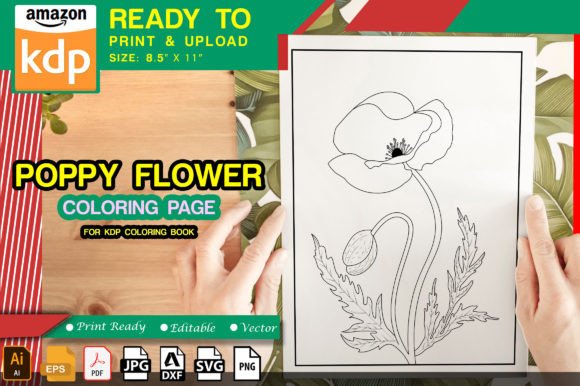
When I first opened the Poppy Flower Coloring Page file, I immediately felt a quiet, botanical elegance that is surprisingly hard to find in ready-to-use design assets. The poppy itself has a gentle, hand-drawn quality that feels organic and unforced. It is not overly symmetrical or stiff. The petals have a soft, natural flow, and the overall composition leaves enough breathing room for thread to become the true medium. As someone who has spent years testing embroidery files, converting artwork, and troubleshooting stitch-outs on everything from delicate onesies to heavy canvas totes, I look at a design like this and immediately start mapping it to real products.
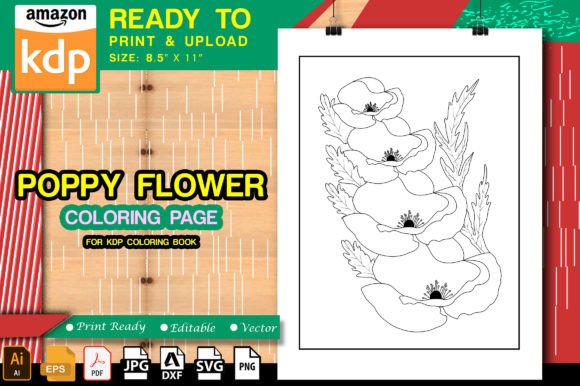
This is a digital printable coloring book page, originally meant for Coloring Pages Amp projects and Amazon KDP publishing. But the moment I saw the linework, I knew it had a second life waiting in the embroidery world. The clean, defined outlines and open interior spaces make it a strong candidate for conversion into a machine embroidery design, especially for applique or light fill stitch approaches. The poppy flower, with its recognizable silhouette and emotional warmth, fits into so many handmade product categories that it is worth a serious, practical evaluation before you load it into your digitizing software.
The Mood and Visual Personality of the Poppy Design
There is a calm, nostalgic feeling to this poppy illustration. It does not scream for attention. Instead, it carries a quiet confidence that works beautifully on natural fiber fabrics like linen, cotton, and soft denim. The flower head is generously sized, and the stem curves gently without becoming too fragile. This balance is important because embroidery thread has physical thickness. A design that is too delicate in its original linework can become a muddy mess when stitches start piling up. The Poppy Flower Coloring Page avoids that trap. The lines are distinct enough to translate into a clean running stitch or a well-placed satin stitch outline, and the interior spaces invite creative fill decisions.
I could see this design stitched in a single rich thread color, like a deep burgundy or a muted terracotta, on a natural linen pillow cover. The simplicity would let the stitch texture do the talking. Alternatively, an applique design interpretation could use fabric scraps for the petals, creating a layered, tactile effect that feels high-end and handmade. The mood is versatile enough to shift from modern farmhouse to bohemian studio depending on your thread choices and fabric background.
Where This Design Naturally Belongs in Your Product Line
Not every design fits every product. I have learned this the hard way, unpicking stitches at midnight before a craft fair. The poppy motif has a feminine, organic softness that leans naturally toward certain product categories. Here is where I would confidently place it:
- Custom apparel: A single poppy stitched on a crewneck sweatshirt, placed off-center near the collar, feels intentional and boutique-quality. On a lightweight linen button-up, it adds a subtle artistic detail.
- Tote bags and market bags: This is one of the strongest matches. A natural canvas tote with a poppy embroidered in the corner, perhaps with a single leaf, makes a beautiful everyday item that customers perceive as worth the premium price.
- Pillow covers and home decor: Linen pillow covers, especially in neutral tones, become something special with a thoughtfully placed floral embroidery. The poppy works well in a cluster or as a solitary statement.
- Kitchen towels and tea towels: A flour sack towel with a small poppy embroidered near the hemline has that farmhouse market appeal that consistently sells well.
- Baby and nursery items: On a soft cotton baby blanket, bib, or a simple nursery wall hanging, the gentle poppy shape feels tender and appropriate. The scale can be reduced carefully for smaller items.
I would be slightly more cautious with caps and hats. The curved surface and structured panels can distort floral designs that have long, unanchored stems. If you want to put this on a cap, consider isolating just the flower head and shortening or removing the stem entirely. The same goes for tiny patches. The full design at a very small size might lose the petal definition. A patch version would need to be simplified and tested ruthlessly.
Thinking Through Stitch-Out Realities
When I evaluate any design for embroidery, I run through a mental checklist of potential failure points. The Poppy Flower Coloring Page has a few areas that deserve your attention before you commit to a production run.
Fabric choice matters deeply. On thin, stretchy fabrics like jersey or lightweight knit, the outline stitches could pull and distort if the stabilizer is not dialed in perfectly. I would recommend a cutaway stabilizer for apparel and a quality tearaway for woven goods like towels and pillow covers. Test on scrap fabric. I cannot stress this enough. A design that stitches beautifully on quilting cotton can turn into a disaster on a slinky bamboo blend.
Thread color contrast is another make-or-break factor. On dark fabrics, like a deep navy sweatshirt, a light thread color will pop dramatically, but every tiny stitch irregularity will also be magnified. On light fabrics, a tone-on-tone approach using a slightly darker thread than the fabric creates an understated, elegant effect that hides minor imperfections. I often test a new design in both high-contrast and low-contrast scenarios before offering it to customers.
Stitch density is a conversation you need to have with your digitizing software. The original coloring page has open areas that are meant to be filled with color by hand. In embroidery, those open areas become decisions. Will you fill them with a fill stitch, which adds density and time? Will you leave them as open fabric, relying on the outline to define the shape? An applique approach splits the difference nicely, using fabric for the petal mass and stitches for the detail lines. Each choice affects the final look, the stitch count, and the production time. If you are making these for a craft business or Etsy shop, time per piece directly impacts your margin.
From Digital File to Tangible Product
One thing I appreciate about the Poppy Flower Coloring Page is that it comes from a Graphics category asset, which means the original artwork is likely clean and scalable. The file included is an AI format, which is a vector file. This is excellent news for embroidery digitizers. Vector artwork can be resized without losing quality, and the paths can often be imported directly into digitizing software. If you are converting this yourself, you are starting from a much better place than a low-resolution JPG pulled from a random website.
However, the product description notes that this is a Digital Printable Coloring Book for Adults or Kids, and it is primarily intended for Amazon KDP and other marketplace publishing. That means you need to pause and check the licensing terms carefully before you begin selling embroidered products made from this design. The original license may cover print publishing, but commercial embroidery use, where you are selling finished physical goods, is a different category. Always confirm with the seller or review the license agreement. Do not assume. A quick email now can save you a legal headache later.
For those who are creating digital embroidery files to sell to other stitchers, the same caution applies. You are creating a derivative work, and the original license must allow for that. Many graphic assets are sold with personal use or limited commercial use terms. Clarify before you invest hours in digitizing.
Products Where I Would Use Extra Caution
I have made enough mistakes to know where the risks hide. Here are the situations where I would approach this design with extra care:
- Small hoop sizes: If you try to squeeze the full poppy, stem and all, into a 4x4 hoop, the detail will suffer. The stem becomes a thin, fragile line that can break or look wiry. Consider cropping to just the flower head for small hoops.
- Textured fabrics: Terry cloth, fleece, and heavily napped fabrics can swallow fine stitch details. The poppy's outlines need a smooth surface to read clearly. If you must stitch on something textured, use a water-soluble topper to create a smooth stitching surface.
- Frequent washing: On items that will be washed repeatedly, like kitchen towels or baby bibs, make sure your stitch edges are secure. A loose running stitch outline can snag and fray over time. A well-digitized satin stitch edge holds up better.
- Layered garments: Stitching through multiple layers, like a jacket with a lining, requires careful hooping and stabilizer selection. The design itself is not the problem, but the project complexity can catch beginners off guard.
Giftability and Customer Perception
There is a reason floral designs dominate the handmade market. Flowers are emotionally safe, widely loved, and gender-neutral in a way that many other motifs are not. The poppy specifically carries connotations of remembrance, resilience, and natural beauty. A personalized gift featuring this poppy, perhaps with a name or a short date embroidered nearby, becomes a meaningful keepsake. I have seen similar designs used for wedding gifts, memorial pieces, and Mother's Day presents. The emotional weight of the flower adds perceived value to the finished product.
From a branding perspective, a poppy motif can become a signature element for a small shop. Consistent use of a recognizable floral design across your product photos, packaging, and actual merchandise builds brand consistency faster than constantly switching between unrelated designs. If the poppy aligns with your shop's aesthetic, this could be a cornerstone design that you return to season after season.
Practical Embroidery Designer Notes
Before you stitch this design for a client, a craft fair, or your online store, here is my straightforward advice:
- Test on scrap fabric first. Match the fabric type and color to your intended final product as closely as possible.
- Check thread color contrast. View your test stitch-out under different lighting conditions. What looks good under bright studio lights may disappear in a dimly lit living room.
- Review stitch density. Too dense, and the fabric puckers. Too sparse, and the design looks unfinished. Find the sweet spot.
- Confirm hoop size. Measure the design dimensions and ensure they fit comfortably within your hoop, leaving room for the hoop to grip the fabric without crushing existing stitches.
- Inspect small details. The petal edges and stem connection points are where issues often hide. Look closely at the test stitch-out.
- Test in black and white. A quick monochrome printout or screen view can reveal whether the design holds up without color crutches. Strong designs read well even in grayscale.
- Compare light and dark fabric backgrounds. The same design can look entirely different on white linen versus charcoal canvas. Know which version you are selling.
- Use proper stabilizer. Do not cheap out here. The right stabilizer is the difference between a professional product and a wavy disappointment.
- Confirm licensing. Before selling finished items or digital embroidery files, make sure the original Poppy Flower Coloring Page license allows for your intended use. This is not optional.
The Final Stitch
As a digital embroidery file starting point, the Poppy Flower Coloring Page has genuine potential. It offers a clean, emotionally resonant floral design that can elevate a wide range of handmade products. The vector format gives you flexibility, and the natural subject matter gives you a broad audience. The limitations are mostly practical ones: hoop size, fabric choice, and the responsibility of checking your license before you sell.
I would not hesitate to use this design on a tote bag design for a boutique collection, a sweatshirt embroidery for a small batch release, or a pillow cover for a home decor line. It is the kind of design that customers recognize and respond to, without being trendy or fleeting. In a market flooded with overly complex, poorly structured embroidery files, a simple, well-drawn poppy is a quiet asset. Just do your testing, respect the fabric, and make sure your paperwork is in order. That is how you turn a coloring page into a product people keep.