Peony Flower Coloring Page: Embroidery Design Review
I’ve been working with embroidery files for years, and I’ll be honest: the first time I opened Peony Flower Coloring Page for Adults. I wasn’t looking at it as a coloring page. I was imagining how those petals would feel under a running stitch, how the layered floral shapes might translate to satin-filled appliqué, and whether the whole thing would hold up on a natural linen tote bag. That’s the lens I always use when I pull a new graphic into my workflow. I’m not just a designer; I’m the person who will eventually hand a finished product to a customer or a friend, and I need to trust what I’m working with.
First Look: A Classic Floral That Feels Like a Quiet Sunday Morning
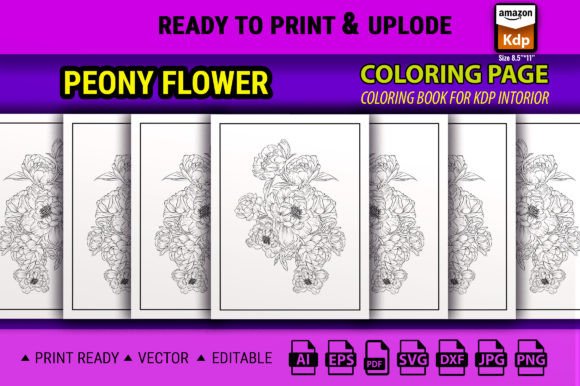
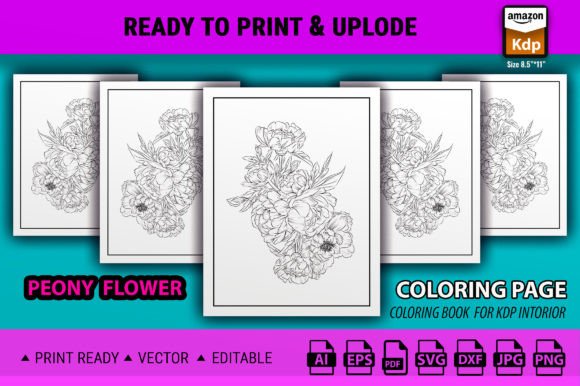
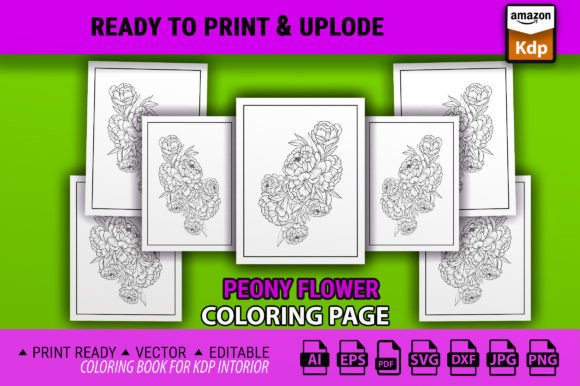
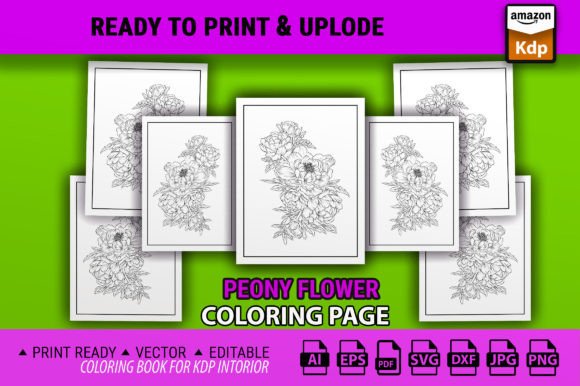
This peony design doesn’t scream for attention. It’s soft, slightly vintage, and built around a generous bloom that fills the page without feeling cramped. The vector artwork is organized into clean linework, which is exactly what you’d want from a Coloring Pages Amp asset. The flower petals have gentle curves, a few leaves curl outward, and there’s a quiet rhythm to the whole shape. It’s the kind of graphic that makes you think of a monogrammed pillow cover, a linen tea towel handed down at a wedding, or a simple baby onesie with a single bloom stitched near the hem. Mood-wise, it’s calm, botanical, and approachable. No overly intricate filigree that would turn into a thread nest. It’s a good starting point if you’re thinking about natural, everyday embroidery.
Can a Coloring Page Really Become an Embroidery Project?
This is the question I get asked most often by Etsy seller friends and small shop owners who buy digital assets. The answer is yes, but with intention. Peony Flower Coloring Page for Adults. is a printable Graphics file, not a digitized embroidery file. You won’t find stitch angles, trims, or color stops inside. And that’s perfectly fine, as long as you know what you’re signing up for. I spent a few hours with this design, tracing over the lines in my digitizing software, testing how the petals would convert to fills and outlines. The vector quality is clean, so auto-tracing gave me a decent base. From there, I built a simple applique design with a satin-stitch edge and a few running-stitch details for the leaf veins. That’s where the real value of this file sits: as a design asset that you can reinterpret, not as a ready-to-stitch download.
Real Project Test: A Custom Tote Bag for a Gardening Friend
I had a birthday gift coming up, so I used this peony as the centerpiece for a cream canvas tote. I wanted something that felt handmade but not rustic, and the peony’s shape scaled beautifully to about 5 inches wide. I placed the bloom off-center, tucked a small embroidered initial underneath, and let the petals do the talking. My test stitch-out on medium-weight cotton went smoothly with a medium-weight cutaway stabilizer. I used three thread colors: a dusty rose for the main petals, a soft moss green for the leaves, and a pale gold for the center shading. The result was crisp, and the recipient immediately asked if I could make more for her plant shop. That’s the kind of reaction that tells me a design has real-world product potential.
Where This Peony Shines Brightest
Over the years, I’ve learned that big, open floral shapes with clear separation between petals are incredibly forgiving on a range of products. Based on my test, Peony Flower Coloring Page for Adults. would work beautifully on:
- Tote bags and market bags, especially natural fibers
- Linen pillow covers where the texture adds depth to the satin stitches
- Kitchen towels if you keep the design light and avoid dense fill areas
- Baby embroidery for nursery decor, like a framed hoop art or a small blanket corner
- Custom apparel such as light-wash denim jackets or a simple pocket on a chambray shirt
- Embroidered patch projects, if you reduce the detail and create a clean border
- Holiday embroidery gifts, especially for Mother’s Day or spring-themed craft fairs
In each case, the peony reads as gentle and intentional, never overpowering. It’s the kind of design that makes a handmade product feel boutique, not diy.
Watch Out: When the Design Needs a Little Restraint
No single design works everywhere, and this one has a few edges to watch. First, the original artwork contains some thin inner lines that would disappear on a small hoop or on textured fabric. On a sweatshirt embroidery project, for instance, those fine details would get swallowed by the knit. I’d simplify heavily, maybe even dropping the center vein lines and letting the appliqué shape do the work. Stretchy fabrics like jersey or ribbed knits need extra care; I’d never use this design on a cap without shrinking it down and testing the stitch density on a curved surface first. Dark fabrics also need a rethink. The subtle shading you’d get from the coloring page’s line art vanishes on black or navy. You’ll want to add a light underlay or switch to a solid fill stitch to keep the design visible.
And for baby items or anything that will be washed frequently, avoid overly dense satin borders. I’d lean into a lighter fill stitch and a soft edge to keep the fabric from puckering. If you’re planning a personalized gift like a monogrammed apron, give the peony breathing room. It doesn’t need to be the only thing on the product, but crowding it next to text or a heavy border will make the finished piece look busy.
From a Business Perspective: What Buyers Actually See
When I sell an embroidered piece, whether it’s a craft business item at a local market or a listing in my shop, the visual appeal of the design is half the sale. The other half is trust. A clean, well-placed floral like this peony signals that you cared about the product before you ever threaded the needle. I’ve noticed that customers respond to recognizable floral shapes that feel personal but not complicated. With Peony Flower Coloring Page for Adults., the silhoette is instantly readable from a distance, and that’s a huge advantage for Etsy seller photography or printable mockup previews. If you’re using the design as a digital embroidery file for commercial embroidery projects, the same rule applies: a clear floral outline builds buyer confidence faster than a messy, overly detailed graphic.
For small shop branding, this peony could become a signature motif. I could see it repeated across thank-you cards, sewn on the inside of a garment tag, or used as a subtle corner accent on packaging. It’s versatile without being generic, and that’s a rare spot to hit with floral assets from coloring book collections.
Practical Embroidery Designer Notes Before You Commit
I keep a checklist for every design I test, especially when it comes from a Graphics marketplace rather than a dedicated embroidery shop. Here’s what I recommend for anyone planning to use Peony Flower Coloring Page for Adults. in a real embroidery project:
- Test on scrap fabric first. The vector may look smooth on screen, but fabric texture changes everything.
- Check thread color contrast against your base fabric. This peony benefits from soft tonal shifts, not harsh contrasts.
- Review stitch density after digitizing. Fills that are too heavy on light fabric cause puckering; too light and the fabric shows through.
- Confirm hoop size. The original 8.5×11 inch layout is large, but you’ll likely scale it down. I wouldn’t go below 4 inches for a full bloom unless you’re removing detail.
- Inspect small details after digitizing. The space between petals needs to be wide enough for a stitch turnaround, or you’ll get thread breaks.
- Test in black and white mockups to see how the design reads without color. It should hold its shape as a silhouette.
- Compare light and dark fabric backgrounds. A design that works on cream might vanish on charcoal.
- Use proper stabilizer. I prefer a medium cutaway for flat items, and a tear-away for projects where the back won’t be seen.
- Check licensing before selling finished items. Since this is a KDP interior file, you must confirm whether commercial use on physical products is allowed, and whether you can sell finished embroidered goods made from a derivative design.
Many digital embroidery file sellers provide clear license terms, but since this product is a coloring page and not an embroidery file, those details are on you to verify. The same goes for file formats: the listing mentions vector formats, but you’ll need to digitize the design yourself. Make sure your software can open the file you receive, and that you’re comfortable converting it before you list any embroidered patch or tote bag design in your shop.
Final Thoughts After a Hands-On Test
I’ve worked with dozens of floral graphics that looked lovely on screen but fell apart under the needle. Peony Flower Coloring Page for Adults. isn’t one of those. It’s a solid, well-proportioned asset that gives you room to play. You can simplify it for a quick applique design, build it into a layered satin stitch piece, or use it as a base for a freestanding lace ornament. The fact that it’s a coloring page actually works in your favor: the line art is intended to be filled in, which means you can interpret the color choices and shading in a way that suits your thread palette and your project. I’d happily use it again for a baby embroidery gift set, a custom apparel order, or a holiday embroidery collection. Just remember to treat it as a springboard, not a finished embroidery file. Your digitizing skills will make the difference between a flat graphic and a piece of stitching that feels alive. If you’re willing to put in that time, this peony is more than worth the effort.