Daffodil Flowers Coloring Pages Book: Graphics & Coloring Pages Amp
As a digital product creator who’s launched over 200 design assets across Etsy, Creative Market, and Shopify—many of them seasonal coloring collections—I opened Daffodil Flowers Coloring Pages Book expecting something predictable. Instead, I found a quietly versatile graphic design asset with strong commercial legs—if used intentionally.
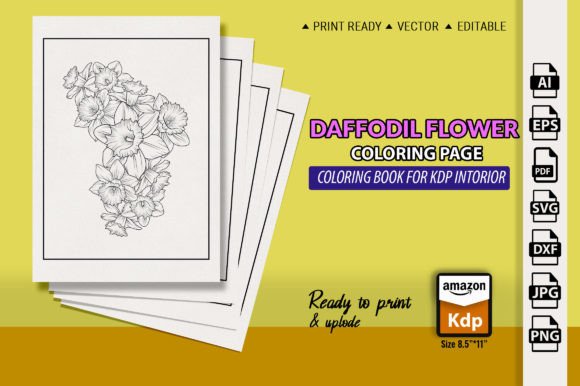
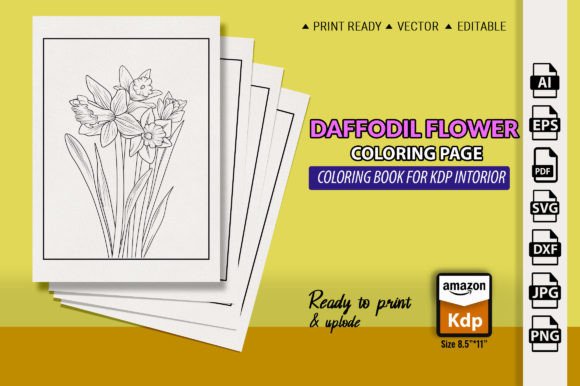
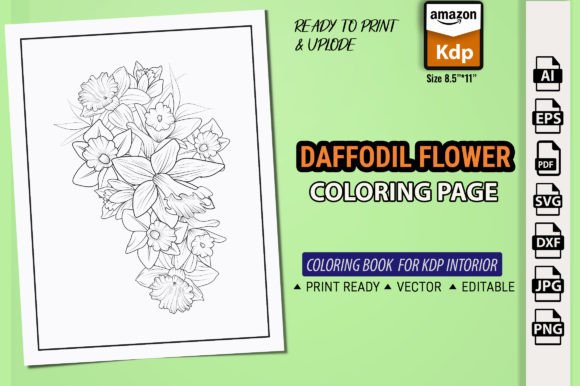
This is a digital printable daffodil-themed coloring book designed for adults, built from clean vector illustrations in Adobe Illustrator. Each page measures 8.5×11 inches and ships in multiple formats: high-res PDF (print-ready), layered PNG (with transparent background), SVG (optimized for cutting machines), and AI source files. It’s not just “clipart”—it’s a cohesive interior layout meant for KDP publishing, but its individual elements translate powerfully into standalone design assets.
Mood, Niche, and First Impressions
The collection leans elegant and botanical—not cutesy or cartoonish. Lines are confident but not overly thick; stems curve naturally, petals have subtle asymmetry, and negative space is well considered. That gives it quiet sophistication—ideal for spring-themed branding, wellness-focused planners, or upscale greeting cards. It attracts buyers who prefer mindful, nature-based aesthetics over bold, trendy florals. Think Etsy shoppers searching “spring printable planner,” “botanical wall art,” or “adult coloring book KDP interior.”
Where This Asset Delivers Real Commercial Value
Daffodil Flowers Coloring Pages Book isn’t limited to coloring books. Its vector foundation makes it unusually flexible:
- SVG products: Clean cut lines mean reliable Cricut and Silhouette projects—think daffodil-shaped iron-on transfers for tote bags or vinyl decals for mugs and tumblers.
- PNG design bundles: Isolated flowers and leaves (included as separate layers) work beautifully as planner stickers, scrapbooking kits, or social media graphics when paired with soft pastel or sage-green palettes.
- Sublimation design: The open-line style holds up well on ceramic and polyester—test one flower at 300 DPI on a mockup mug before scaling across your POD catalog.
- Canva template integration: Drop individual blooms into invitation templates, blog headers, or email newsletter banners. They scale cleanly and pair well with serif fonts (e.g., Playfair Display) for elegance or rounded sans serifs (e.g., Quicksand) for approachability.
- Printable wall art & nursery prints: Print one full-page illustration at 12×16” on matte paper—it reads as intentional fine-art decor, not generic clipart.
- T-shirt and tote bag designs: Use simplified single-flower motifs (not full pages) to avoid overcrowding. A centered daffodil with light stem detail reads cleanly even on dark fabric.
How It Strengthens Product Presentation
Used strategically, this asset elevates perceived value across listings. On Etsy, a thumbnail showing three distinct daffodil variations (full bloom, bud, side profile) builds visual hierarchy faster than text alone. In a Canva template bundle, including one daffodil-lined border instantly signals “spring collection”—supporting brand consistency without extra design time.
It also improves trust: customers see professional spacing, consistent line weight, and thoughtful composition. That translates to higher click-through rates and fewer “Is this print-ready?” questions in your inbox.
Where to Use It Carefully
This isn’t a one-size-fits-all solution. Avoid using full-page illustrations for:
- Tiny sticker sheets: Fine petal details vanish below 1.5 inches. Test cut one SVG at 0.75” before bundling.
- Dark-background packaging or merch: Some line weights fade against navy or charcoal unless manually adjusted in Illustrator or Canva.
- Text-heavy templates: Busy stems compete with body copy. Use only isolated blooms or simplified outlines near headlines.
- Low-resolution print products: While the source files are crisp, downsampling to 150 DPI for budget greeting cards risks jagged edges—always verify output on actual paper samples.
Practical Seller Notes Before Launch
Before uploading to your shop or bundling into a larger collection, do these five things:
- Test on real mockups: Drop an SVG into a Cricut Design Space project and run a test cut on cardstock. Check for stray anchor points or overlapping paths.
- Preview as a thumbnail: Shrink the main image to 200px wide—does the floral shape remain legible? If not, simplify or crop.
- Check contrast on white + dark backgrounds: Export one PNG at 300 DPI and overlay it on both. Adjust stroke weight if needed.
- Verify commercial license terms: Confirm you’re allowed to sell finished products (e.g., printed mugs, stitched patches) — not just the digital file itself.
- Organize customer files clearly: Name folders “SVG_Cricut,” “PNG_Transparent,” “PDF_Print,” and include a plain-text license summary. Clarity reduces support tickets.
Final Thought: A Quiet Workhorse, Not a Flashy Gimmick
Daffodil Flowers Coloring Pages Book won’t go viral—but it will quietly convert. It supports small business branding through cohesion, not clutter. When paired with minimalist packaging design, gentle typography, and intentional seasonal storytelling, it becomes part of a trusted visual language. For sellers building long-term digital download shops, print-on-demand catalogs, or themed Canva template suites, this is less of a “trend” and more of a foundational graphic design asset—one that earns its place across multiple product categories, seasons, and customer touchpoints.