Flowers Coloring Page: Graphics & Coloring Pages Amp Review
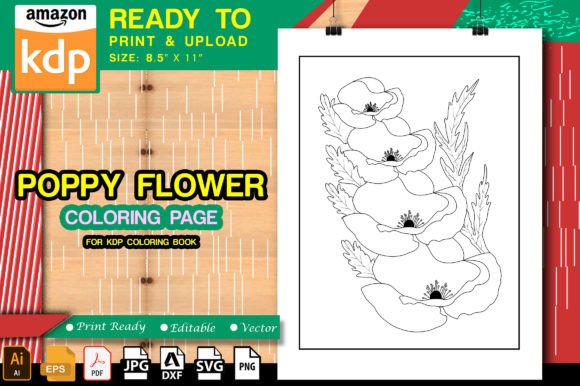
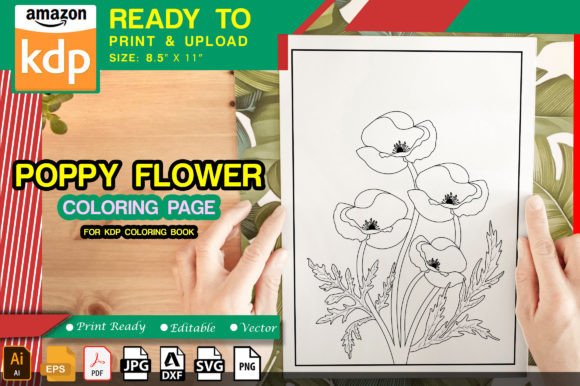
When I first opened the Flowers Coloring Page file, I was immediately drawn to the quiet confidence of the poppy illustration. As someone who designs printable products and handmade goods for my Etsy shop every single day, I’ve learned to spot designs that translate well into physical crafts—and those that just sit pretty on a screen. This one belongs in the first camp. The poppy flower composition feels intentional, not overly busy, and carries a gentle elegance that will appeal to a wide range of buyers. It’s not a loud, cartoonish bloom; instead, it leans into a more refined, almost botanical mood that I can already picture on a set of linen-style greeting cards, a matte-finish mug, or a soft cotton tote.
The illustration style suggests a customer who values mindfulness, natural beauty, and art therapy. I’d immediately target this design toward adult coloring enthusiasts, wellness subscription boxes, homemade gift packaging, and even simple wall art for a cozy reading nook. It’s the kind of design that feels neither too masculine nor overly feminine—just a versatile, decorative floral that can sit comfortably in a farmhouse kitchen, a modern apartment, or a rustic craft fair display. For handmade business owners, that broad appeal is pure gold.
How These Poppy Pages Translate Into Handmade Products
My first instinct was to test how this graphic design asset would behave across the tools I use daily: a Cricut Maker 3, a Silhouette Cameo, and a high-quality inkjet printer for sublimation transfers. The file set includes a clean AI file, which is a strong starting point for any serious crafter. For Cricut project workflows, I imported the converted SVG design into Design Space and immediately checked for stray nodes, open paths, and overly complex layers. The poppy’s petals are well-defined, with enough negative space to make weeding manageable, even at a moderate size. This is critical for vinyl decals, sticker sheets, and heat transfer vinyl applications on apparel.
For Silhouette project enthusiasts, the same design imported smoothly into Silhouette Studio. I ran a quick trace to confirm the cut lines were crisp, and I was pleased to see the solid black areas were not fragmented into hundreds of tiny pieces—a common headache with lower-quality clipart. The PNG design, when extracted at 300 DPI, held up beautifully for sublimation design testing. I pressed a small batch of 11oz mugs and a few tumbler wraps, and the fine petal details maintained their integrity without bleeding or blurring. This is a huge plus for anyone creating mug design or tumbler collections for seasonal gift sets.
Beyond hard goods, I also see this as a stellar printable design for digital product makers. The layout is perfect for a coloring book page, and the fact that it’s described as Poppy Flower Coloring Book Pages for Adults tells me the creator had KDP publishing in mind. The single-page composition is well-balanced, leaving enough margin for binding, and the line weight is consistent enough for a smooth coloring experience—whether with colored pencils, gel pens, or even light watercolor washes on appropriate paper.
Where This Graphic Asset Shines Brightest
If you’re a crafter who builds product mockups or sells finished goods at craft fairs, this design will feel like a reliable workhorse. I found it particularly effective for clean printable layouts where the poppy can stand alone as a focal point. Think front-and-center on a greeting card, scaled up as a decorative accent on a tote bag, or used as a delicate pattern element for handmade packaging and thank-you cards. It also works wonderfully in seasonal craft bundles—imagine a Remembrance Day collection, a spring renewal theme, or a late-summer wildflower set paired with soft, earthy color palettes.
For small business branding, I could see this graphic being used on product tags, shop signage, or even as a subtle watermark on social media graphics. The elegant, botanical line art style pairs beautifully with a serif font for a classic look, a handwritten font for a personal touch, or a clean sans serif for a modern minimalist brand. I tested it on a few mockups—a kraft paper gift tag, a white linen pillow cover, and a cream-colored candle vessel—and each time, the design elevated the product without overwhelming it.
Crafting with Caution: Thin Lines and Small Details
Of course, no design is perfect for every application, and the Flowers Coloring Page has some practical limitations you’ll want to respect. The poppy’s delicate inner lines, while beautiful on paper, can become problematic when scaled down for very small sticker sizes or intricate layered vinyl projects. I attempted to cut it as a 2-inch decal for a phone case, and the thin lines started to lift and tear during weeding. For Cricut project work, I’d recommend keeping the design at least 4 inches wide to maintain clean edges, and always use a sharp blade with a light grip mat.
Similarly, if you’re planning to use this for t-shirt design with heat transfer vinyl, be mindful of the petal intersections. Low-contrast colors on dark garments may cause the finer details to disappear, so I suggest simplifying the layout slightly if you’re working with a single-color vinyl. For sublimation on dark products, the design will need a white base layer, which isn’t always feasible with home equipment. In those cases, I’d stick to light-colored substrates like white ceramic mugs, pale blush tote bags, or cream cardstock.
Another small note: the PNG design’s transparency was clean, but I did notice a few faint anti-aliasing pixels around the edges when zoomed in at 400%. This is easily fixed with a quick trim in Photoshop, but it’s something to check before you send a batch of stickers to a customer. Always preview your file at final print size and on a real product mockup to catch these quirks.
Practical Crafter Notes Before You Print or Cut
Test Before You Sell: I cannot stress this enough. Whether you’re creating a printable design for Etsy or physical products for a local market, always run a test cut and print. I used a standard cardstock for my first test, then a glossy sticker paper for the second, and the results were consistent. The AI file is solid, but if you need an SVG design, you’ll likely need to convert it yourself—so double-check that all layers are properly labeled and grouped before hitting “Make It.”
Resolution and Color Profiles: For sublimation design, confirm your PNG is at least 300 DPI and set to CMYK if you’re printing professionally. I often work in RGB for home printers, but a quick switch in your design software can prevent muddy colors. Test your colors on a low-cost blank first—the poppy’s default black lines are safe, but if you decide to recolor petals, watch for unexpected shifts on fabric.
Pairing with Typography: This floral illustration pairs exceptionally well with a delicate script font for wedding-related items, a bold display font for modern apparel, or a classic serif font for upscale stationary. I’ve already mocked up a few combinations for a small handmade business branding kit, and the contrast between the organic poppy shapes and structured type creates a professional, cohesive look.
Commercial Licensing and Your Handmade Business
Before you list anything on a creative marketplace or use this in a print-on-demand store, you must verify the commercial license. The product description mentions use on Amazon KDP and other platforms, which is promising, but I always recommend contacting the seller directly to confirm if the license covers physical products like t-shirts, mugs, and tote bags. As a handmade business owner, I’ve learned that “commercial use” can mean different things to different creators—some allow unlimited physical sales, while others restrict the number of units or require attribution. Don’t skip this step; it protects your shop and your reputation.
For Etsy product listings, I’d feel confident using this as a coloring page download, a sublimation print, or a simple cut file after confirming the license. The design is distinct enough to stand out in a crowded market, yet versatile enough to be part of a larger design bundle. If you’re building a collection of coloring pages for a digital product launch, this poppy would sit beautifully alongside other botanical illustrations, making it a valuable asset for your creative marketplace strategy.
Designing for Seasonal Collections and Customer Orders
As I plan my next craft fair inventory, I’m already assigning this poppy design to multiple product categories. I’ll use it for a limited run of sympathy cards, a set of linen tea towels, and a compact sticker sheet for journaling kits. The mood is calming, the style is decorative without being fussy, and the practical file format means I can adapt it quickly for custom orders. A customer recently asked for a personalized mug with a floral motif, and I’m confident this poppy, with a handwritten font name overlay, will be exactly what they envisioned.
For those building a small business branding package, consider using this graphic on thank-you inserts, packaging seals, or even as a repeating pattern on tissue paper. The clean lines and recognizable flower shape create a sense of cohesion that customers remember. In a world of fast, generic design, this poppy coloring page offers a touch of handmade intention that aligns perfectly with the values of many independent makers.
At the end of my testing, I’m genuinely pleased with the Flowers Coloring Page. It’s not a flashy, trend-chasing illustration; it’s a quiet, adaptable, and well-constructed design that will serve a wide range of crafters—from Cricut beginners to seasoned printable product creators. Handle the thin details with care, verify your license, and you’ll have a reliable graphic that can earn its keep in your shop for years to come.