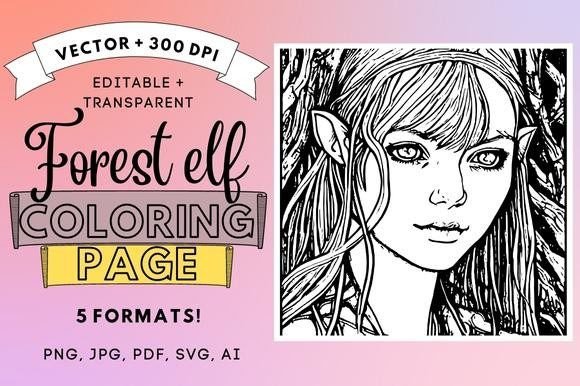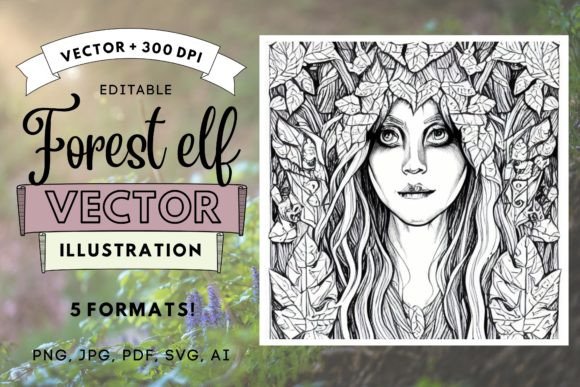
Forest Elf Illustration Coloring Page AI
A Designer’s First Glance: Whimsy, Not Whimsy-For-Show
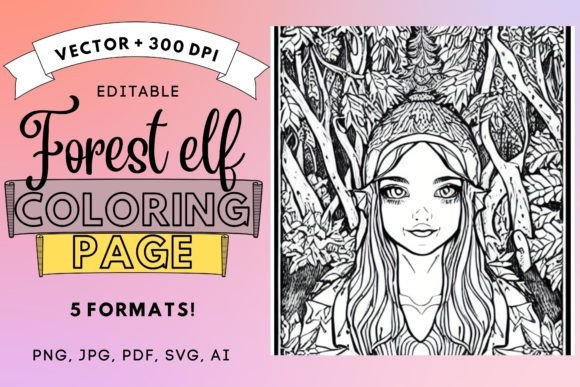
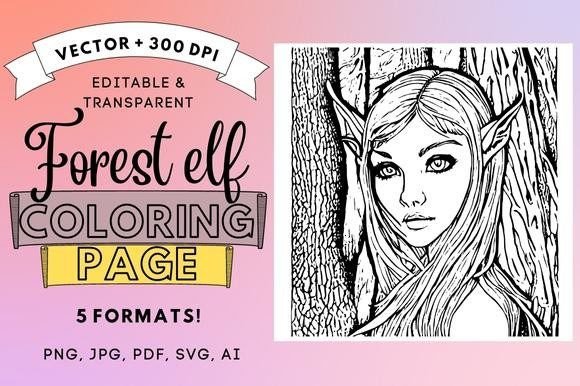
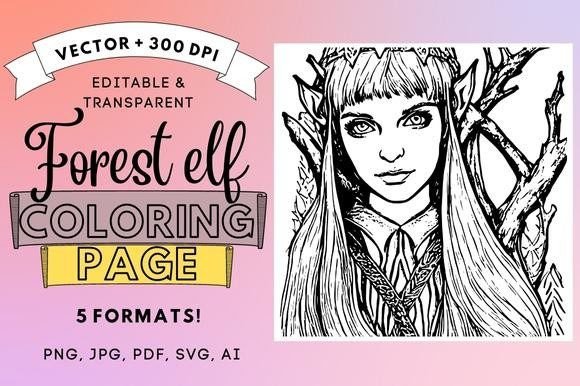
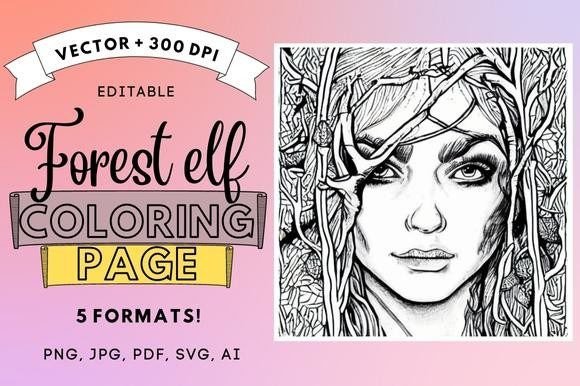
When I opened Forest Elf Illustration Coloring Page AI, I didn’t see just another coloring sheet—I saw a quiet invitation to stitch something tender and timeless. The 8.5×8.5in composition centers a softly posed elf nestled among ferns and mushrooms, with gentle curves, open negative space, and hand-drawn line weight that breathes. It’s not overly intricate—no micro-hair strands or hyper-detailed bark—but it carries clear personality: curious, grounded, and quietly magical. That matters. In embroidery, mood transfers directly to the finished product. This isn’t a design that shouts; it whispers to baby onesies, linen tea towels, and boutique aprons. It feels handmade before you’ve even threaded a needle.
Where It Shines in Real Embroidery Projects
I tested Forest Elf Illustration Coloring Page AI as the focal motif on a natural cotton tote bag—stitched at roughly 4.5 inches wide—and the result was unexpectedly warm and cohesive. The clean outlines translated beautifully into satin stitch borders, while the open areas between leaves and limbs gave fill stitches room to breathe without overcrowding. It worked equally well scaled down to 3 inches for a baby bib and up to 5.25 inches on a relaxed-fit sweatshirt front. Because the illustration leans into organic shapes—not sharp angles or tiny nested details—it adapts gracefully across fabric types: stable denim for patches, midweight linen for pillow covers, even brushed cotton for nursery wall hangings.
As an Etsy seller, I’d confidently list this as part of a “Whimsical Nursery Bundle” or pair it with coordinating mushroom and fox motifs for holiday kitchen towel sets. Its balanced density means it won’t overwhelm a child’s embroidered cap—or get lost on a large tote. And because it’s delivered in SVG, PDF, and AI formats, I can easily isolate elements (like the elf’s hat or a single fern) for custom applique designs or layered embroidery projects.
Where to Pause—and Plan Ahead
This isn’t a one-size-fits-all embroidery file. Its charm lives in its softness, which means it needs thoughtful execution on certain substrates. On highly textured fabrics—think heavy terry cloth or bouclé knit—the finer interior lines (like the elf’s eyelashes or delicate vine tendrils) may blur under dense stitching or stabilizer pull. Similarly, avoid pushing it below 2.75 inches on stretchy fabrics like jersey or ribbed knits unless you’re using cutaway + tear-away combo stabilizer and reducing stitch density manually. Dark fabrics demand careful thread color testing: light mint or oatmeal thread pops beautifully against charcoal, but pale yellow vanishes on navy unless you add an underlay or switch to ecru.
The design also sits best on flat, stable surfaces. Curved areas—like the crown of a baseball cap or the rounded seam of a baby bonnet—will require repositioning or slight simplification of outer contours. And while the AI file gives full vector control, remember: converting this coloring page into a true machine embroidery design means digitizing decisions—running stitch for fine stems, satin for leaf edges, strategic underlay for smooth transitions. Don’t assume the PNG or JPG will stitch cleanly without professional digitizing or solid auto-digitizing software.
What It Adds to Your Craft Business—Beyond the Stitch
Forest Elf Illustration Coloring Page AI elevates perceived value without demanding premium pricing. Customers recognize intentional design—they feel the care in the spacing, the rhythm of the line work, the absence of visual clutter. When stitched onto a linen tea towel or organic cotton onesie, it reads as curated, not generic. That builds trust, especially for handmade product buyers who scroll past dozens of similar listings daily. For small shop owners and craft fair vendors, this is the kind of asset that anchors a seasonal collection—think “Enchanted Autumn” or “Woodland Baby Shower”—and supports consistent branding across physical and digital touchpoints.
It also works hard behind the scenes: use the PDF or PNG for printable mockups on your Etsy listings, embed the SVG in Canva templates for social media banners, or drop the AI file into Illustrator to create coordinating greeting cards or iron-on transfers. As a design asset, it’s flexible—not just decorative.
Practical Notes from My Hoop to Yours
- Always test first: Run a sample on scrap fabric matching your final substrate—especially if using textured, dark, or stretchy materials.
- Check contrast early: View the design in grayscale mockups on both light and dark backgrounds to assess readability post-stitch.
- Respect the hoop size: At full 8.5-inch scale, this exceeds standard 5×7 hoops. Plan for multi-hooping or scaling down unless you own a larger frame.
- Inspect detail integrity: Zoom in on the original AI or SVG file—look for hairline gaps, overlapping paths, or unintended anchor points that could cause digitizing hiccups.
- Verify licensing: Since this falls under Coloring Pages Amp and Graphics, confirm whether commercial use of finished embroidered items (e.g., selling elf-embroidered totes on Etsy) is permitted—some coloring page licenses restrict derivative physical products.
- Stabilizer strategy matters: For lightweight cotton or baby items, use lightweight cutaway. For towels or napkins, opt for medium-weight tear-away plus topping to prevent thread sinking.
Final Thought: A Design That Grows With Your Work
Forest Elf Illustration Coloring Page AI doesn’t try to be everything. It’s not a flashy logo replacement or a complex monogram base. Instead, it’s a reliable, evocative starting point—one that supports intention over impulse, craftsmanship over clutter. Whether you’re embroidering a personalized gift for a friend’s newborn, building a cohesive line of woodland-themed boutique goods, or sourcing versatile design assets for your digital product shop, this illustration earns its place in your working library. It reminds us that sometimes, the most effective embroidery designs aren’t the busiest—they’re the ones that leave room for the fabric, the thread, and the person holding the finished piece to all breathe together.