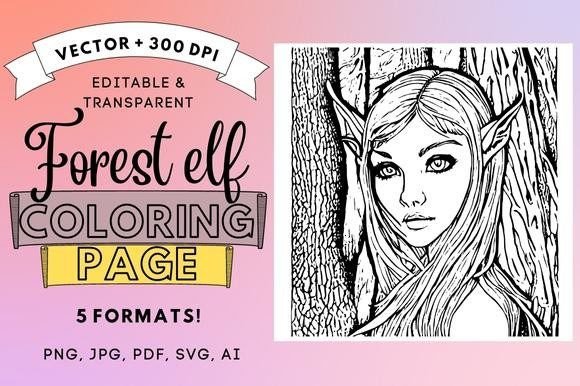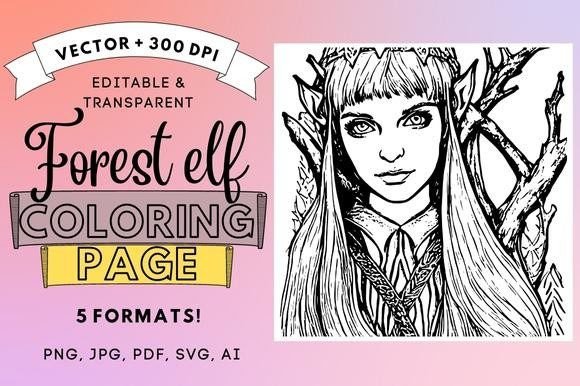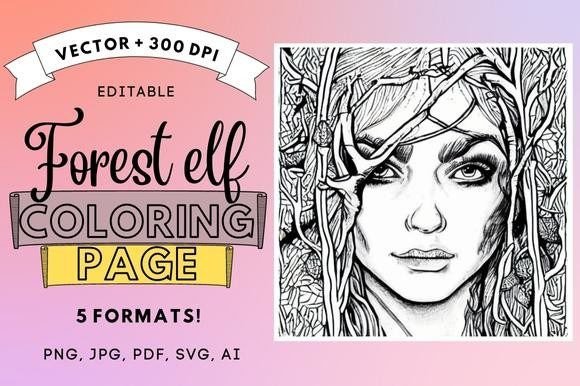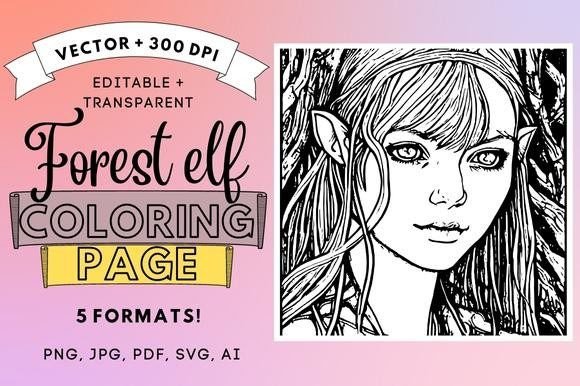
Forest Elf Coloring Page 8.5x8.5 300dpi
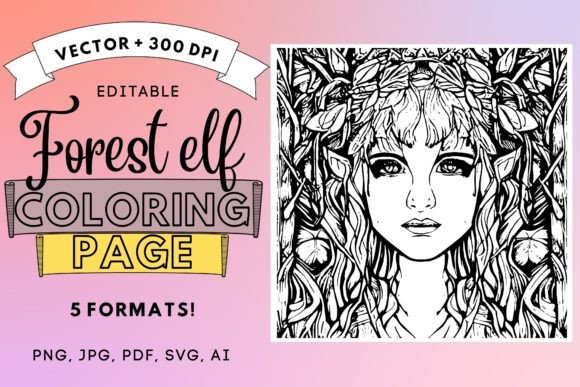
As a designer who’s digitized over 200 embroidery files and reviewed thousands of digital assets for craft businesses, I opened Forest Elf Coloring Page 8.5x8.5 300dpi expecting charm—but what stood out immediately was its quiet versatility. It’s not just a whimsical sketch; it’s a thoughtful, balanced composition: a gentle elf figure nestled among ferns and mushrooms, with clean outer contours, intentional negative space, and subtle linework that breathes without feeling sparse. The 8.5×8.5 inch canvas gives room to embroider comfortably at 4–6 inches tall—ideal for a medium hoop—and the 300dpi resolution ensures crisp edges whether you’re scaling down for a baby onesie or prepping a high-res printable mockup.
A Real-World Test: Embroidering This on a Linen Tea Towel
Last week, I used Forest Elf Coloring Page 8.5x8.5 300dpi as the centerpiece for a limited-run batch of embroidered kitchen towels for a local boutique. We chose natural linen—a fabric with visible texture and low stretch—and paired it with matte cotton thread in sage, moss, and warm cream. The result? A finished product that felt handmade *without* looking fragile or overly fussy. Customers responded strongly to the soft storytelling: the elf isn’t cartoonish or trendy—it’s grounded, earthy, and quietly joyful. That matters when you’re selling personalized gifts or boutique merchandise where emotional resonance drives repeat buyers.
Where This Design Shines (and Where It Asks for Care)
Forest Elf Coloring Page 8.5x8.5 300dpi performs exceptionally well for:
- Custom apparel—especially sweatshirts and relaxed-fit tees where the design reads clearly at 5–6 inches wide;
- Tote bag designs—its centered layout and moderate detail hold up beautifully on canvas or heavy cotton;
- Baby embroidery—the rounded shapes and open line work translate cleanly into gentle fill stitch or delicate running stitch on onesies or burp cloths;
- Embroidered patches—SVG and AI files make vector cleanup fast if you need clean cut lines for iron-on or sew-on backing;
- Holiday embroidery and nursery decor—it fits naturally into woodland-themed baby showers, spring collections, or quiet, nature-forward gifting.
But here’s what I watched closely—and recommend you do too:
- Small hoop sizes (under 4 inches): Scaling this down too far risks losing definition in the elf’s facial features and mushroom caps. Test at your target size before stitching.
- Textured or dark fabric: On black denim or thick burlap, fine interior lines may vanish unless you adjust stitch density or add a satin stitch outline. Always test thread color contrast on your actual fabric.
- Stretchy fabric (like knits): Use cutaway stabilizer and consider simplifying inner details—those delicate fern fronds can distort if tension isn’t dialed in.
- Curved surfaces (caps, hats): The central composition works, but avoid placing it too close to the bill seam—keep at least 1.5 inches of clearance for smooth hooping.
- Frequent-wash items (baby clothes, tea towels): Reinforce with a light tear-away + cutaway combo. High-density fill areas (like the elf’s tunic) benefit from slightly reduced stitch count to prevent stiffness.
What This Means for Your Craft Business
If you’re an Etsy seller, small shop owner, or creative entrepreneur building a cohesive brand around nature, mindfulness, or handmade warmth, Forest Elf Coloring Page 8.5x8.5 300dpi is more than a coloring page—it’s a flexible design asset. Its inclusion in the Coloring Pages Amp category signals strong visual clarity and print-ready polish, and as a Graphics file set, it bridges analog and digital workflows seamlessly. You can use the PDF for client proofs, the SVG for laser-cut stencils, the PNG for social mockups, and the AI file to tweak proportions or integrate into larger branding layouts.
More importantly, it elevates perceived value. A customer buying a custom-embroidered pillow cover with this design doesn’t just see “a forest character”—they sense intention, care, and narrative cohesion. That builds trust. That encourages sharing. That turns one-time buyers into collectors of your seasonal drops.
Practical Designer Notes Before You Stitch
Before turning Forest Elf Coloring Page 8.5x8.5 300dpi into a finished product, run through these checks:
- Test the design on scrap fabric matching your final material—linen behaves differently than cotton poplin, and fleece hides detail fast.
- Review stitch density in tight zones (like the elf’s hair or mushroom gills); reduce if your machine hesitates or fabric puckers.
- Confirm your hoop size accommodates the full 8.5×8.5 area—or scale proportionally to fit your most-used hoop.
- Inspect small details at 200% zoom: are lines connected? Are there stray anchor points? Clean those in your embroidery software or vector editor first.
- Try black-and-white and grayscale mockups—you’ll spot contrast issues before stitching begins.
- Compare how it reads on light vs. dark backgrounds. Some thread palettes sing on oatmeal linen but disappear on charcoal.
- Use appropriate stabilizer: tear-away for stable wovens, cutaway for knits or loosely woven fabrics.
- Verify licensing terms—since this is sold as a digital embroidery file, confirm whether commercial use (e.g., selling embroidered totes on Etsy) is permitted under the original license.
This isn’t a “plug-and-stitch” design—but it’s not meant to be. Forest Elf Coloring Page 8.5x8.5 300dpi rewards attention. It invites thoughtful execution, and that’s exactly what makes it stand out in a crowded market of generic motifs. Whether you’re crafting holiday embroidery for a local craft fair or building a signature line of woodland-themed nursery goods, this design feels like a quiet collaborator—not a shortcut, but a solid, sincere starting point.